Hardwood Pellets vs. Softwood Pellets
Should you choose hardwood or softwood pellets for your stove? Many homeowners new to pellet heating have this question on …
01.27.2025
4 minute read
Rising Brent crude oil prices catch homeowners off guard. A manageable heating bill one month becomes a budget shock the next. You're watching global oil markets and supply chain issues control your budget, with no way to predict or influence them.
Pellet heating offers a more reliable alternative to traditional oil heating. This guide provides transparent cost breakdowns, shows you how to calculate savings for your home and explains when switching makes the most financial sense.
Rising oil prices have pushed homeowners to seek heating oil alternatives with more predictable costs.
Heating oil prices are volatile because they're tied to global crude oil markets. Geopolitical events, production decisions by oil-producing nations, supply chain disruptions and international demand all influence what you pay to heat your home.
Major industry players, such as Chevron, acknowledge the price fluctuations and market volatility that characterize the heating oil industry. When supply routes get disrupted or output changes, heating oil costs shift. Your monthly bill reflects these global forces. Seasonal demand, storage levels and refining capacity play a role in determining what homeowners pay.
In New England, the average cost of residential heating oil ranges from $4.12 to over $5.50 per gallon as of August 15, 2026, depending on the specific state, city, supplier and tracking index. The New England Heating Oil Prices database displays costs for various areas across the region.
Globally, the Energy Information Administration (EIA) projects Brent crude oil prices will decline toward $69 per barrel by 2027 as inventory levels normalize. However, this outlook is subject to shifts influenced by geopolitical instability, which can alter the market trajectory.
When finding heating oil alternatives, you need the full financial picture. With ongoing increases in oil prices, the cost gap between traditional oil and pellet heating is widening. Pellet stoves can significantly reduce exposure to geopolitical volatility, as pellets are a domestically sourced fuel, offering greater consistency and predictability in annual heating costs.
Pellet heating systems require an initial investment. Pellet stove installations can range from $1,600 to $4,100 for freestanding models and $2,500 to $7,000 for fireplace inserts. Pellet boiler systems capable of heating an entire home can cost between $8,000 and $30,000, including professional installation. Both options offer long-term savings compared to continuing with an oil heating system.
These numbers include equipment, labor, venting and initial setup and show that installing a pellet appliance could be a practical investment for your home. Different pellet appliance types are suited to different situations.
With the recent surge in crude oil prices, heating costs climbed to $2,525 or higher. This price unpredictability makes budgeting almost impossible.
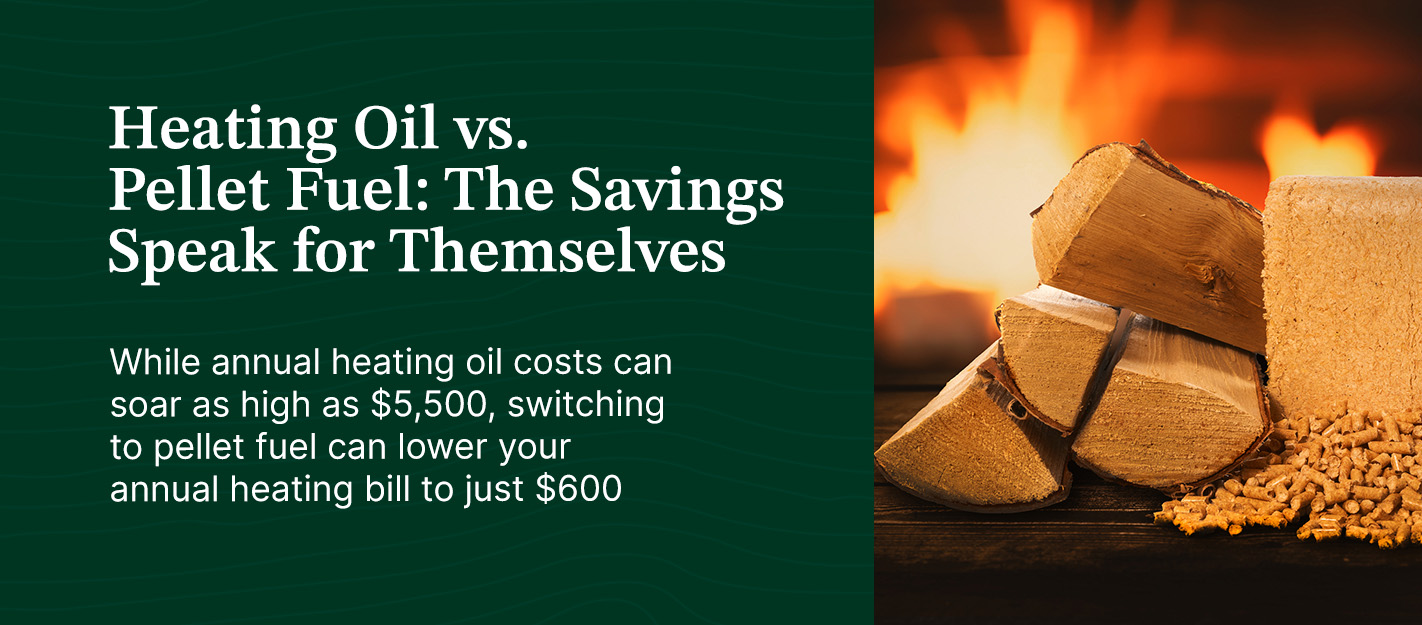
Lower fuel costs create a payoff over time. For a clear heating cost comparison, the following table summarizes the annual heating costs for an average 2,000-square-foot home using heating oil versus pellet fuel:
| Heating Type | Price per Unit (August 2026) | Annual Consumption | Annual Cost | Annual Savings vs. Oil |
|---|---|---|---|---|
| Heating Oil | $4.12-$5.50/gallon | 500-1,000 gallons | $2,060-$5,500 | — |
| Wood Pellets | $300-$450/ton | 2-5 tons | $600-$2,250 | $1,460-$3,250 |
Data sources: U.S. Energy Information Administration, Trading Economics, Pellet Fuels Institute
The Pellet Fuels Institute (PFI) fuel calculator provides an interactive way to see your potential savings based on current fuel prices in your area. Most homeowners find that pellet fuel costs 30% to 50% less per British thermal unit (BTU) than heating oil.
Understanding your personal return on investment (ROI) helps you decide if switching to cheaper heating alternatives, such as pellet heat, makes financial sense. Divide your net up-front cost by your annual fuel savings to determine how many years it takes to recover your investment.
Subtract any rebates or tax credits from your equipment and installation cost to get your net investment. Then, divide that number by your expected annual fuel savings. A $5,000 pellet stove with a $1,500 tax credit leaves a net cost of $3,500. With $935 annual fuel savings, your payback period is approximately four years.
While the main federal tax credit for biomass heating has ended, homeowners can still access financial support and incentives to make the switch elsewhere.
Certain states and utility companies have clean energy incentive programs. Access to these programs depends on your location and gives you incentives that can reduce up-front costs when you switch to pellet heat.
Examples of these incentives include:
Many manufacturers and dealers offer seasonal promotions on equipment purchases. Sales are typically slower during warmer months, so spring and summer offer better pricing opportunities.
Also, look into financing options that spread the up-front cost into manageable monthly payments. Financing can make the switch easier. Ask local dealers about their current financing terms and any upcoming promotions.
Timing is everything when it comes to installation and your immediate savings. The best time to make the switch is during low-demand seasons, such as spring and summer. Here's a logical timeline:
Your existing system's age also factors into timing. Older heating systems may operate less efficiently than modern alternatives. Aged equipment tends to use more fuel than necessary and require more repairs.
Following these three steps can help you make the right choice for your home and budget.
Start by assessing your current heating system. The answers to these questions determine whether a pellet stove or a pellet boiler makes more sense for your home:
Pellet stoves offer supplemental heating for living areas. They're less expensive to buy and install, and work well for homeowners who want to reduce oil use and costs without replacing the existing system.
Pellet boilers and furnaces replace your entire oil heating system. There are many types of appliances available, from freestanding stoves and fireplace inserts to central heating systems.
Professional installation is highly recommended for safety, efficiency and warranty coverage. Look for installers who are certified by the appliance manufacturer or have industry credentials.
Finding local dealers and installers who specialize in pellet heating equipment gives you access to qualified professionals. These experts can assess your home, recommend appropriate equipment and complete installation correctly.
Keep your heating costs low and your system running with our pellet heating solutions. We operate 27 plants across the U.S. and Canada, manufacturing PFI-certified hardwood and softwood pellets engineered for quality and reliability.
Every pellet bag meets rigorous standards for low ash content and high BTU output, so your heating system runs efficiently year-round. When you choose our pellets, you're choosing fuel that delivers the cost stability and dependability you need.
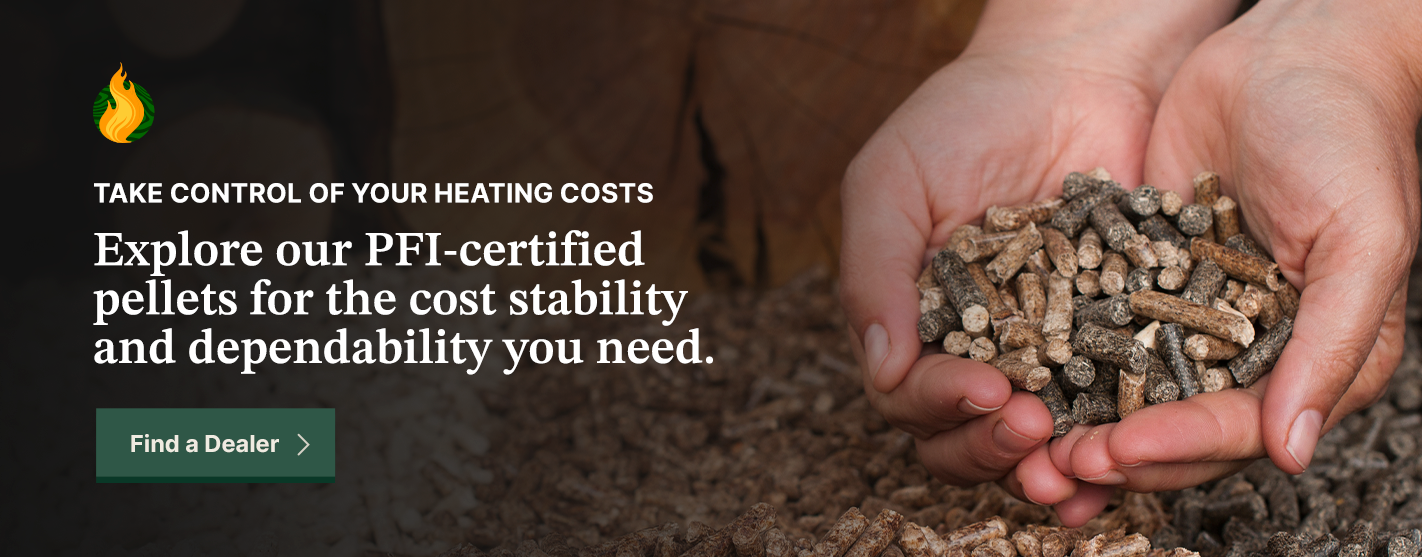
Want to take control of your heating costs? Explore our products and find a local retailer near you to get started.