Hardwood Pellets vs. Softwood Pellets
Should you choose hardwood or softwood pellets for your stove? Many homeowners new to pellet heating have this question on …
01.27.2025
4 minute read

Your pellet stove is an investment in your winter warmth and comfort. EPA-certified pellet stoves are highly efficient, achieving efficiency ratings between 70% and 83% under ideal conditions. However, minor issues can compromise your stove's performance, causing it to burn more pellets to achieve your desired temperature.
Fortunately, you can unlock your stove's untapped potential with a few simple DIY fixes, all without spending more of your hard-earned money on fuel. Here's how.
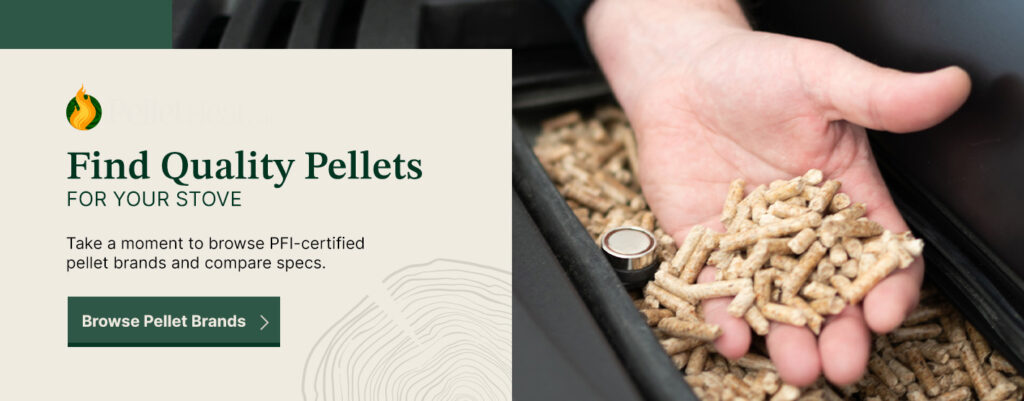
The fastest way to save money on pellets is to stop buying ones that make your stove work harder than it needs to. Low-quality fuel packs in more ash, clogs your burn pot faster and delivers less consistent heat bag after bag. The Pellet Fuels Institute Standards Program mark on the bag eliminates the guesswork. Third-party testers follow stringent quality specs around factors such as ash content, moisture levels and heat output. Many stove manufacturers recommend PFI-certified pellets to protect performance and honor manufacturer warranties.
Choosing low-ash, PFI-certified pellets will pay off every time you fill the hopper. To learn what separates a premium bag from a standard one, review PFI's pellet quality standards before your next purchase, or compare hardwood and softwood pellets.
Your burn pot is the workhorse that transforms pellets into a steady flame. Ash and unburned residue will clog the air holes with every use, starving the fire of oxygen. It's easy to spot the signs of a neglected burn pot — it will look crusty, dark and dotted with fused clinkers that won't budge with a light tap.
The fix is more straightforward than you might assume. Scrape out the hardened carbon, clear every air hole completely and pull fused deposits loose before they harden further. Spending five to 10 minutes on this task once a week keeps the burn pot ready for its next load.
Clearing the burn pot is one of the simplest habits for efficient pellet stove operation, and it gets even easier when you use low-ash pellets. Check the full cleaning schedule to build burn pot care into a routine that sticks.
You don't have to adjust the settings to increase pellet stove heat if you start with the most frequently overlooked part — the heat exchanger. This component draws warmth from the fire and pushes it into your room, but if you let ash build up on its surface, it will trap heat that would otherwise reach you. Even a thin coat acts like a blanket between the flame and your living room.
Most stoves include a built-in scraper rod for this job. Run it through the exchanger tubes every two weeks as part of your heat exchanger cleaning routine, or consult your owner's manual if your model works differently. Think of this process as reclaiming the heat your stove already produced. A five-minute pass with the scraper can yield a few extra degrees of precious warmth without adjusting your thermostat.
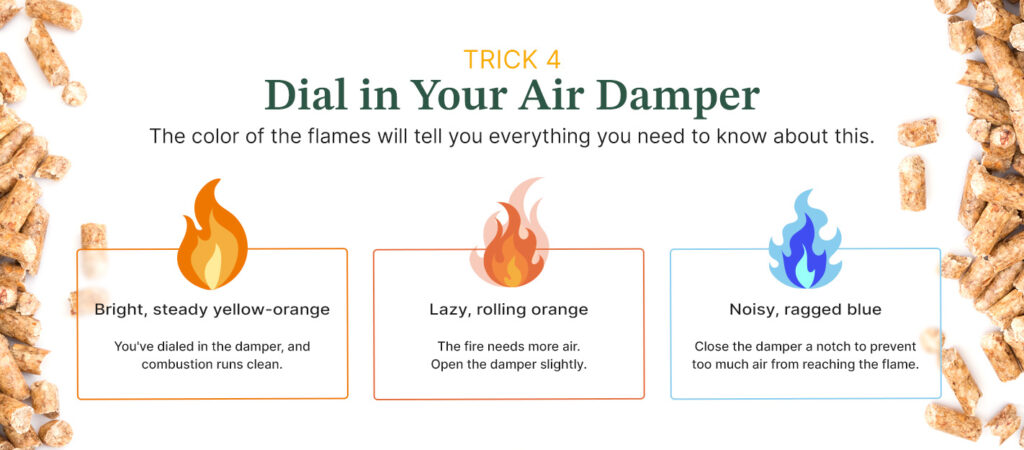
Fires with good airflow burn hot and cleanly. A component called the damper regulates how much combustion air reaches the flame. The color of the flames will tell you everything you need to know about this.
The damper allows you to adjust it in quarter-turn increments, giving you full control of airflow in your stove. Wait three to five minutes after each turn, then check the flame again. Repeat until the color settles into a steady yellow-orange.
This simple process costs nothing and takes only a few minutes, yet it's one of the most effective free fixes available for airflow issues in any pellet stove.
Have you noticed your glass door collects soot faster than it used to? That's often a sign of a failed gasket. Wear and tear on this component will let outside air trickle into the firebox, throwing off the air-to-fuel ratio your stove depends on. Testing it takes 10 seconds. Close the door on a dollar bill, then slowly pull it out. If it slides free with no resistance, your seal has failed.
A replacement rope gasket is usually an affordable fix and takes about an hour to install, making it one of the highest-payoff fixes on this entire list. After you swap it out, your stove will stop working overtime to hold its temperature.
Ash and debris settle in vent pipes over a full heating season, and even a partial blockage can make the combustion blower work overtime to keep the draft moving. That extra strain burns more electricity and forces your stove to work harder while producing less heat.
A quick owner-level check catches most problems early. Inspect accessible sections of pipe for buildup, and keep the exterior vent cap clear of leaves, ice or nesting debris. Do this at the midpoint of your heating season, not just once a year.
A qualified technician should handle full annual cleaning, especially the sections you can't easily reach, following safe pellet stove operation practices. Poor ventilation can also allow carbon monoxide to build up, posing a potentially deadly safety risk. Add venting to your annual maintenance checklist and check it twice a season instead of once.
Many owners run their stove on a fixed manual setting for years, never adjusting the thermostat mode built into the control panel. Manual mode keeps feeding pellets at the same rate, even if your room is already cozy and warm. This setting also invites short-cycling, where the stove repeatedly switches on and off, wasting pellets at every startup.
Switching over to thermostat mode is one of the simplest, most overlooked ways to save money on pellets. Your stove will read the room temperature in real time and adjust the feed rate to match, so pellets will stop burning once they reach your desired point. While you're at it, setting the thermostat back a few degrees overnight can noticeably trim your pellet use.
Once you've completed this seven-item checklist and dialed in your settings, the only thing left to figure out is what goes in the hopper. Every trick on this list works better when you start with quality fuel.
PFI-certified, low-ash pellets burn cleaner, so your burn pot stays clear longer and your heat exchanger collects less buildup between cleanings. Whether you run a Harman, a Quadra-Fire or another model, pellet stoves reward quality fuel no matter the brand.
Take a moment to browse PFI-certified pellet brands and compare specs before your next bag purchase. And if you already know what you want, you can find a retailer near you and stock up before the next cold snap arrives.